Internet Maps
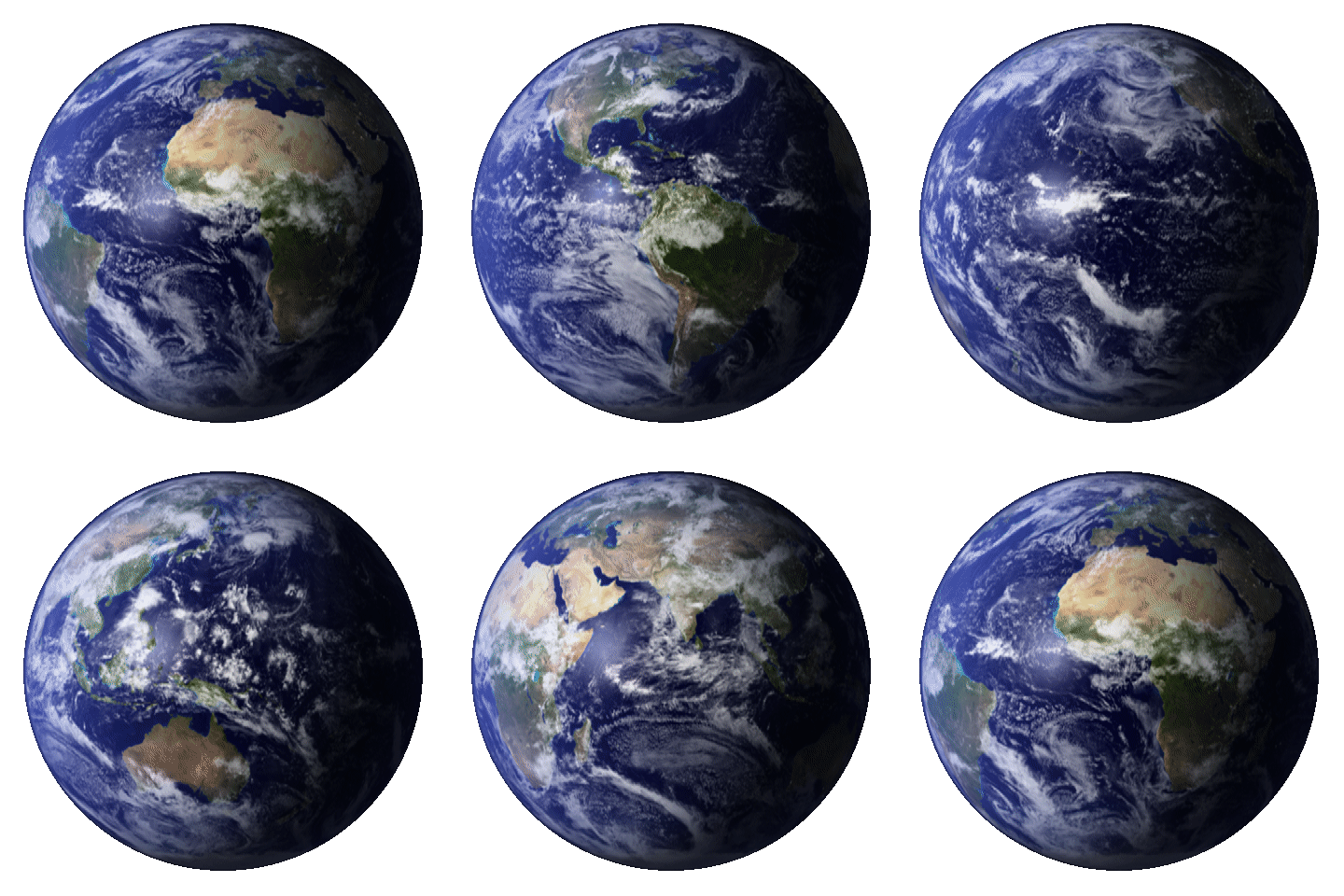
This class’s premise starts from a simple prompt that becomes dramatically more complex when attempted. We will ask and try to answer “how do you map the internet?”. Under a strict definition of what constitutes the internet – an interconnected packet-switched network using the Internet Protocol – this seems daunting. Tracking every wired and wireless connection, deciding where and how a boundary gets set around what constitutes internet access, dealing with national firewalls, and then identifying the machines engaging with “packet switching” seems impossible. This gets even more complicated when we consider that the internet is far more than the WWW, and there are many services which use the internet without a Graphic User Interface.
Show moreDesign Studio 22
Internet Maps
Seoul National University
College of Fine Arts, Department of Design
Fall 2026
Sep 3 → Dec 10, 2026
T 2:00pm → 5:50pm
Building 49, Room 107
Instructor
Chris Hamamoto
chamamoto@snu.ac.kr
Teaching Assistant
Jiwon Park
cocoa5650@snu.ac.kr
Office hours
Friday 2pm – 4pm
building 49 room 207 by appointment
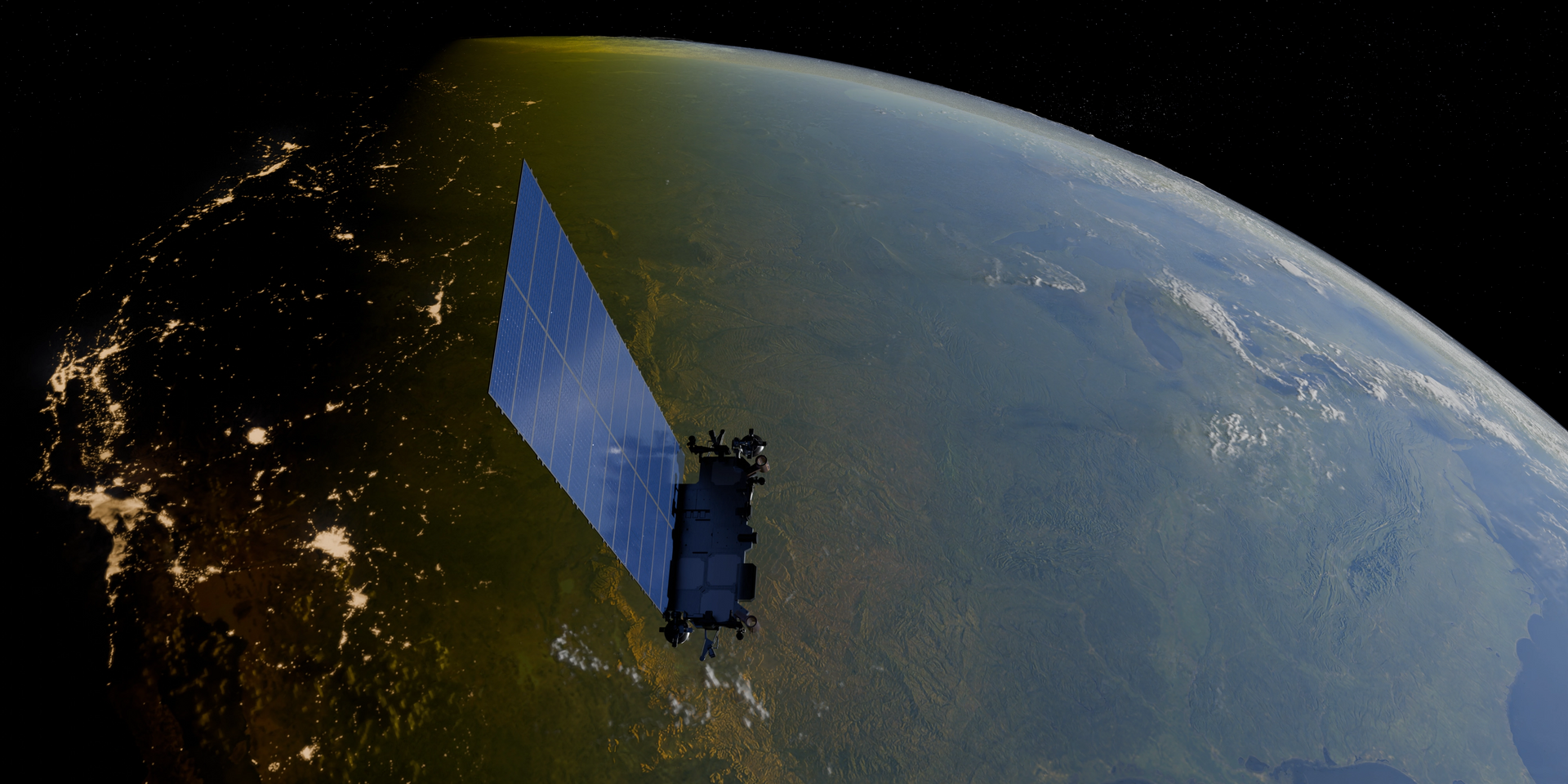
3d rendering of Starlink Satellite
Even if we focus on a specific technology, this hardly resolves the complexity. For instance, if our iPhones are now using “Apple Intelligence”, which is licensing OpenAI’s tech, in a single “feature” we’re now dealing with many locales and entities that are sharing and processing our data within one design (although this is likely true of any application which uses the internet). If we think about the collection and processing of the data used to train those AI models, and then try to add them to our vision of our phones network, it becomes complex on a new magnitude.
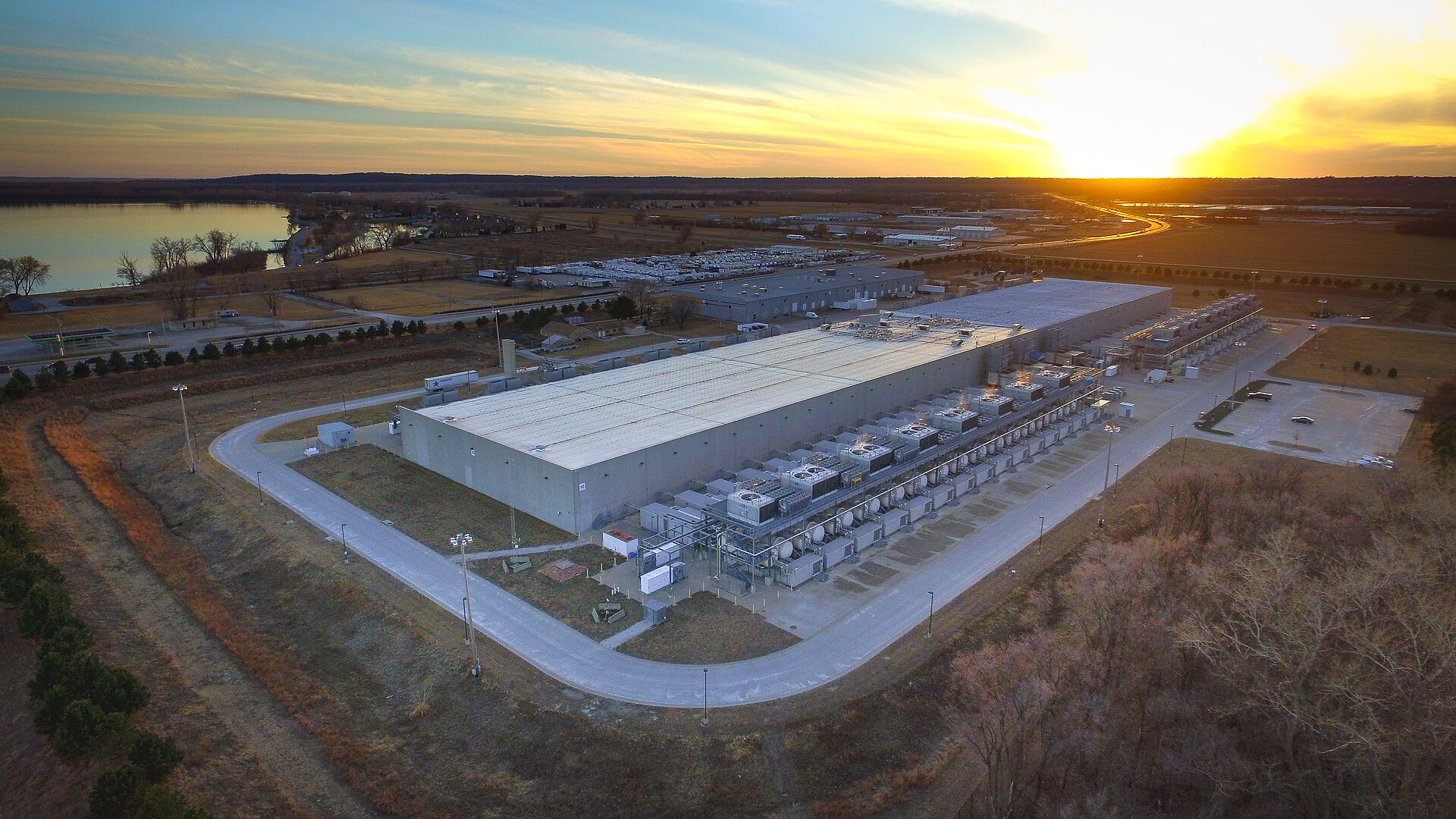
Google data center in Council Bluffs, Iowa
And while the complexity of the internet looms large, we see a growing movement of small scale, local, and ecologically minded computing efforts. Oftentimes these reject the values of big tech, and appropriate these consumer tools for alternative purposes. Or, they go one step further and create their own servers, routers, and networks for communication.
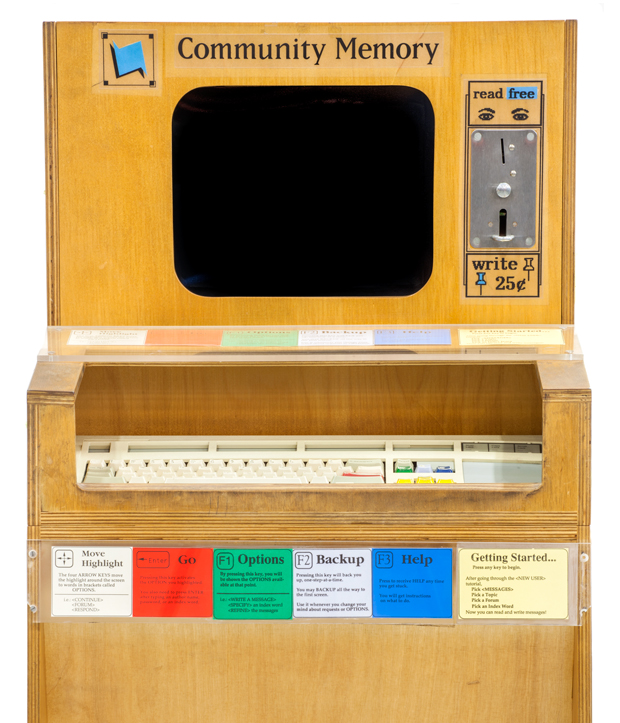
Community Memory
If we look to internet history we see past movements which rooted technology in community and nature. Today, these efforts still exist and have proliferated greatly as access to technology has expanded.

Permacomputing Logo
This class will attempt to create our own maps of the internet, then respond to them in low-tech ways. While with the threat of an impending AI “disruption” is constantly amplified (most often by the AI companies who make the software), we can also take it as an opportunity to build our own software, hardware, and networks.
Learning Outcomes
- An expanded perspective on the internets structure and physicallity
- New techniques for data collection and mapping
- Improve Design Research skills
- To gain proficiency in AI tools for software and hardware development
- Tags: Graphic Design, Network Communications, Visual Communication, Speculative Design, Transdisciplinary, Alternative Cartography
Requirements
Students should be comfortable using design software and producing graphic outcomes (these can range from digital outcomes like webpages or videos, to physical materials such as books, posters, textiles, etc.). Furthermore, students will be tasked with creating software using AI coding tools to assist them. This may require additional development software such as XCode, and code libraries which can be downloaded and installed on your computer for free.
This class focuses more on long term outcomes with sustained effort. If you cannot commit to making work on time, real (printed, coded, etc.), and to a high caliber, this will be reflected in your grade. We must keep deadlines — even preliminary review deadlines — to stay on schedule. Furthermore, the work we produce will be shown in a public way – so it cannot exist solely as sketches in your computers or rough prototypes.
Students must be cordial to their peers and guest speakers. You can use a laptop for note-taking and translation during a lecture / critique / guest presentation / etc., but your full attention should be given to the speaker. This means no side-conversations, working on other projects, etc.!!!
At the very minimum the course requires ability to use the adobe creative suite (indesign + photoshop primarily) and figma!!! If you are concerned about these, please talk with me about it.
Equipment Requirements
- Personal Laptop
- Phone, digital camera, scanner, screen capture etc.
- Access to printers and other means of production
- Adobe Creative Suite
- Figma
- AI tools such as ChatGPT (the school offers free access)
Readings
- There will be routine readings with discussions taking place in class and occassionally online. All students will be required to pose one question and respond to another students question about each reading.
Class Activities
The following activities will take place in-person and online via a number of platforms:
- Reading discussion
- Topic lecture/discussion
- Project critique/discussion
- Group exercises
- One-on-one meetings
- Group meetings
Grading
- 50% ... Individual Projects (There will be 2 project this semester, which will be evaluated through a combination of instructor and self-evaluation)
- 10% ... Group Project
- 10% ... Assignments (Exercises, readings, etc.)
- 10% ... Workshop
- 20% ... Attendance + Participation/Attitude (Being present and active in class via discussion, and preparation)
Letter grades represent the following:
A = excellent;
B = good;
C = satisfactory;
D = unsatisfactory;
F = failure.
Grading Criteria
Individual project grades and final course grade takes into consideration:
- Participation (attendance, engagement in critique, pro-active involvement through the demonstration of discussion and inquiry)
- Process (exploration, iteration, research)
- Concept (thought, originality, creativity, and criticality)
- Design (does the work function as intended, does it communicate, is there clarity of information and intent)
- Presentation (quality of craft, attention to detail, professionalism)
Attendance
Students who are absent for over 1/3 of the class will receive a grade of 'F' or 'U' for the course. (Exceptions can be made when the cause of absence is deemed unavoidable by the course instructor.)
Plagiarism
Students are expected to generate their own work and ideas. Since, this class focuses on a range of ideas including appropriation, there can be some gray area about originality in this context. If you are concerned about the authorship of your work, please discuss with chris.
AI
Please refer to SNU's guidelines for use of Artifical Intelligence for the official school policy. In this class I anticipate students (and the instructor) will use AI for purposes such as translation between languages, and iniital queries. However, AI used as a shortcut to critical processes will not be accepted. Creative and exciting uses of AI are encouraged.
Submitting your work and Class Archive
As a final deliverable, please send a .zip file with documentation of your work over the semester and send to chris via wetransfer by Mon Dec 21.
Credits
This website runs on Kirby and was adapted from a site developed by Laurel Schwulst.